Unlock Big Savings: Ultimate Guide to Mortgage Buydowns for Lower Rates and Long-Term Benefits
Planning to buy a home involves making one of the most substantial financial decisions in your life. Amid rising interest rates, many prospective homeowners are exploring innovative methods to reduce their long-term mortgage costs. One highly effective strategy is a mortgage buydown, which allows you to lower your interest rate upfront by paying points or fees at closing. This approach can significantly decrease your initial monthly payments and overall interest paid over the life of your loan.
Understanding how a mortgage buydown works can empower you to make smarter financial choices. Whether your goal is to reduce your payments during the early years or to secure a permanently lower rate, exploring different buydown options can lead to substantial savings and a smoother mortgage experience. In this comprehensive guide, we will examine various strategies, compare types of buydowns, and outline actionable steps to maximize the benefits of a mortgage buydown.
Understanding the Basics of a Mortgage Buydown
What Is a Mortgage Buydown?
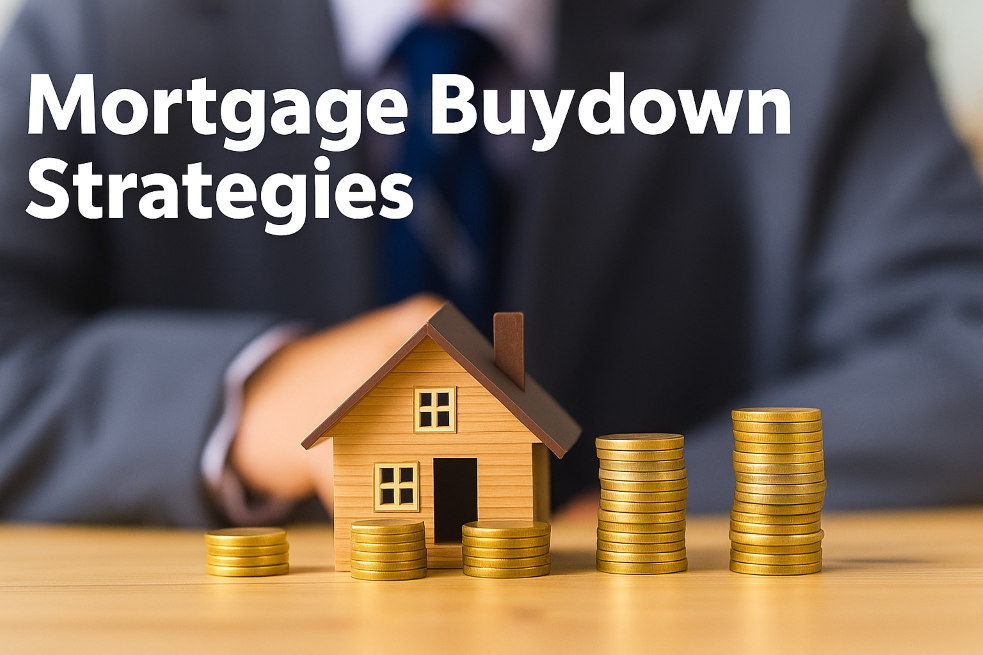
A mortgage buydown is a financing technique where borrowers make an upfront payment—often called points—to reduce their mortgage interest rate. This payment lowers the interest rate during a specific period or for the entire duration of the loan, depending on the type of buydown selected. Essentially, it’s a method of “buying down” the cost of borrowing, which translates into more affordable monthly payments initially.
Typically, paying 1% of the loan amount as points can reduce the interest rate by approximately 0.25%. The decision to pursue a buydown should be based on evaluating whether the initial upfront costs are justified by the projected savings over time. This strategy is particularly advantageous if you anticipate increased income in the near future or plan to refinance later.
How Does a Mortgage Buydown Work?
When opting for a mortgage buydown, you pay points at the closing, with each point generally representing 1% of your loan amount. These points are then used to lower your mortgage’s interest rate. For example, on a $300,000 loan, paying 3 points (amounting to $9,000) might reduce your initial interest rate by around 0.75%. This reduction results in lower monthly payments during the buydown period.
The actual savings from a buydown depend heavily on your loan structure, the interest rate reduction achieved, and how long you intend to keep the mortgage. Calculating the break-even point—where your upfront costs equal the savings from reduced payments—is crucial before proceeding with a buydown.
Types of Mortgage Buydowns and How They Work
Temporary vs. Permanent Buydowns
Understanding the difference between temporary and permanent buydowns is essential, as each serves different financial aims and suits different borrower profiles.
Temporary Buydown
– Offers a reduced interest rate for the first 1-3 years of the loan.
– Commonly used in new construction or when the borrower expects income to increase shortly.
– Typically financed by paying points at closing, which are then offset by higher payments later.
– An example is a 2-1 buydown, where the rate is reduced by 2% in the first year, 1% in the second, then returns to the original rate.
Permanent Buydown
– Provides a lower interest rate for the entire life of the loan.
– Requires paying points upfront—often called “buying down the rate.”
– Ideal for borrowers planning to hold onto their property long-term.
– Results in consistent monthly savings, simplifying long-term budgeting.
How to Use a Mortgage Buydown Effectively
Choosing the appropriate type depends on your financial situation and goals. If you expect your income to rise soon, a temporary buydown might be beneficial. Conversely, if your aim is to maximize long-term savings, a permanent buydown could be more advantageous.
For example, a borrower with a $400,000 mortgage might pay 2 points ($8,000) for a permanent 0.5% interest rate reduction. Over a 30-year period, this can lead to significant monthly savings that outweigh the initial cost. Alternatively, a temporary 2-1 buydown could make initial payments more manageable, easing cash flow during the initial years.
Steps to Implement a Mortgage Buydown Effectively
Step-by-Step Guide to Buying Down Your Mortgage Rate
1. **Assess Your Financial Goals:** Decide whether you prefer lower payments now or over the long term.
2. **Calculate the Break-Even Point:** Use online calculators or consult with your lender to determine how long it takes to recover your upfront investment through monthly savings.
3. **Shop Around for Lenders:** Different lenders may offer varying rates and points, so compare multiple offers.
4. **Decide on the Type of Buydown:** Choose between temporary or permanent options based on your financial outlook.
5. **Negotiate Terms:** Discuss with your lender the number of points needed and the potential interest rate reductions.
6. **Review Total Costs:** Consider closing costs, points, and other associated expenses, including refinancing options.
7. **Finalize the Agreement:** Make sure all terms are clearly documented before closing.
By carefully following these steps, you can leverage a mortgage buydown to optimize your mortgage payments, balancing initial costs with long-term savings.
Comparing Mortgage Buydown Strategies: Pros and Cons
Advantages of a Mortgage Buydown
– Reduces initial monthly payments, easing cash flow in the early years.
– Offers the potential for a lower long-term interest rate, decreasing total interest paid.
– Provides flexibility to choose between short-term relief and permanent savings.
– Can be a strategic move when interest rates are high or expected to decline.
Disadvantages and Considerations
– Requires a significant upfront investment—paying points at closing.
– May not be cost-effective if you plan to sell or refinance early.
– Not all lenders offer favorable terms for buydown options.
– It’s important to perform a thorough analysis to ensure the upfront costs are justified by the savings.
Comparative Analysis
For instance, comparing a traditional mortgage with no buydown versus a 1-point buydown can illustrate the trade-offs. If the upfront cost is $4,000 for a 0.25% interest reduction, and monthly savings are $50, the break-even point is roughly 80 months. If you plan to keep the mortgage longer, the buydown can be very beneficial; if not, it might be better to allocate those funds elsewhere.
FAQs About Mortgage Buydowns
1. What exactly is a mortgage buydown, and how does it work?
A mortgage buydown involves paying points upfront at closing to reduce your mortgage interest rate. This reduction results in lower monthly payments, either temporarily or for the entire loan term, depending on the type of buydown you choose. It’s a financing strategy that allows you to pay more initially to enjoy lower payments later, often making homeownership more affordable.
2. Is pursuing a mortgage buydown a good idea?
Deciding whether a mortgage buydown is worthwhile depends on your specific financial situation, how long you plan to stay in the home, and the upfront costs versus the long-term savings. Performing a break-even analysis—calculating how long it will take for your savings to offset the initial investment—can help you determine if this strategy aligns with your financial goals.
3. Can I negotiate the terms of a mortgage buydown with my lender?
Yes, many lenders are willing to negotiate on the number of points required and the corresponding interest rate reduction. Shopping around and comparing offers from different lenders can help you secure the most favorable terms for your buydown. Negotiation is often a key step in getting the best deal.
4. How does a temporary buydown differ from a permanent one?
A temporary buydown reduces your interest rate for a set period—typically the first 1-3 years—after which the rate returns to the original. This can be helpful if you expect your income to increase or want to ease into mortgage payments. A permanent buydown lowers your interest rate for the entire duration of the loan, offering consistent savings and simplifying long-term planning.
5. What are the typical costs involved with a mortgage buydown?
Costs are usually expressed in points, with 1 point equaling 1% of your loan amount. Paying points at closing can range from 0.5% to 3% of the loan, depending on the level of interest rate reduction you seek. It’s essential to assess whether paying these upfront costs makes sense in light of your long-term savings and financial plans.